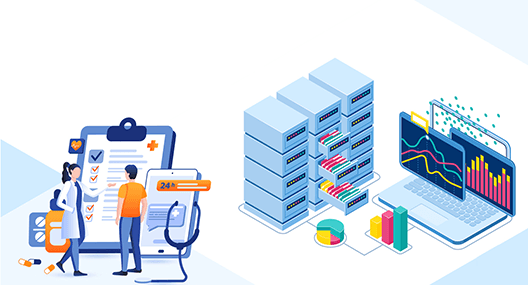

Cloud migration is now the most preferred option being used by enterprises worldwide. With the advent of digital transformation and growing demand for online services, migration from on-premise processing to the cloud has gained momentum — making the move of big data analytics to the cloud only an expected outcome of total digital transformation.
Hesitation in Shifting from On-Premise to Cloud
Though migration to the cloud is being widely adopted for application deployment, there's been hesitation about moving data for analytics specifically — the instinct that on-premise data is more secure. The cloud does offer scalability and performance advantages for big data analytics, but privacy and cybersecurity remain nagging afterthoughts for any migration.
The First Step Is the Toughest
Cloud vendors have learned that moving big data to the cloud works best as a step-by-step approach — starting with micro-projects involving small chunks of data so customers get an actual feel of cloud-based analytics. A successful first migration tends to change the perception in favor of the cloud, and enterprises soon start expanding operations away from legacy on-premise systems.
The Advantages Customers Begin to See
Scalability is one of the dominant factors driving customers to the cloud for data analytics — capacity can be requested and met on demand, in either direction, reducing the pressure of projecting accurate scale years in advance. Everything being available "as a service" also reduces the budget and infrastructure constraints that used to slow analytics projects down, and IT teams can hit the ground running instead of provisioning everything from scratch.
Migration and the Direction of Data Analytics
The heaviest use of data analytics is for predictive analytics, business intelligence, and reporting across sectors like healthcare and the public sector, and the volume of data being mined keeps growing. This kind of scale is now most feasible on the cloud, since on-premise upgrades are expensive and slow — a gap that widens further as AI and machine learning add to the demand for processing power.
The way forward for any data analytics project is a mix of many worlds converging on data — data transformation, end-to-end data testing across databases, warehouses, and data lakes, orchestrating pipelines that move large volumes of data to a target destination, and setting up training and deployment environments for AI/ML models. All of it depends on the cloud to process large volumes of data reliably enough to power a report or dashboard a business can actually trust.